This post contains affiliate links. If you click through and make a purchase I may earn a small commission at no extra cost to you. I only recommend products I genuinely use and believe in. Some products mentioned were gifted to me. All opinions are my own.
If you have wondered why hair changes after 40 — including new shedding, less volume, slower growth, or a different texture — hormones and the hair-growth cycle are often part of the explanation.
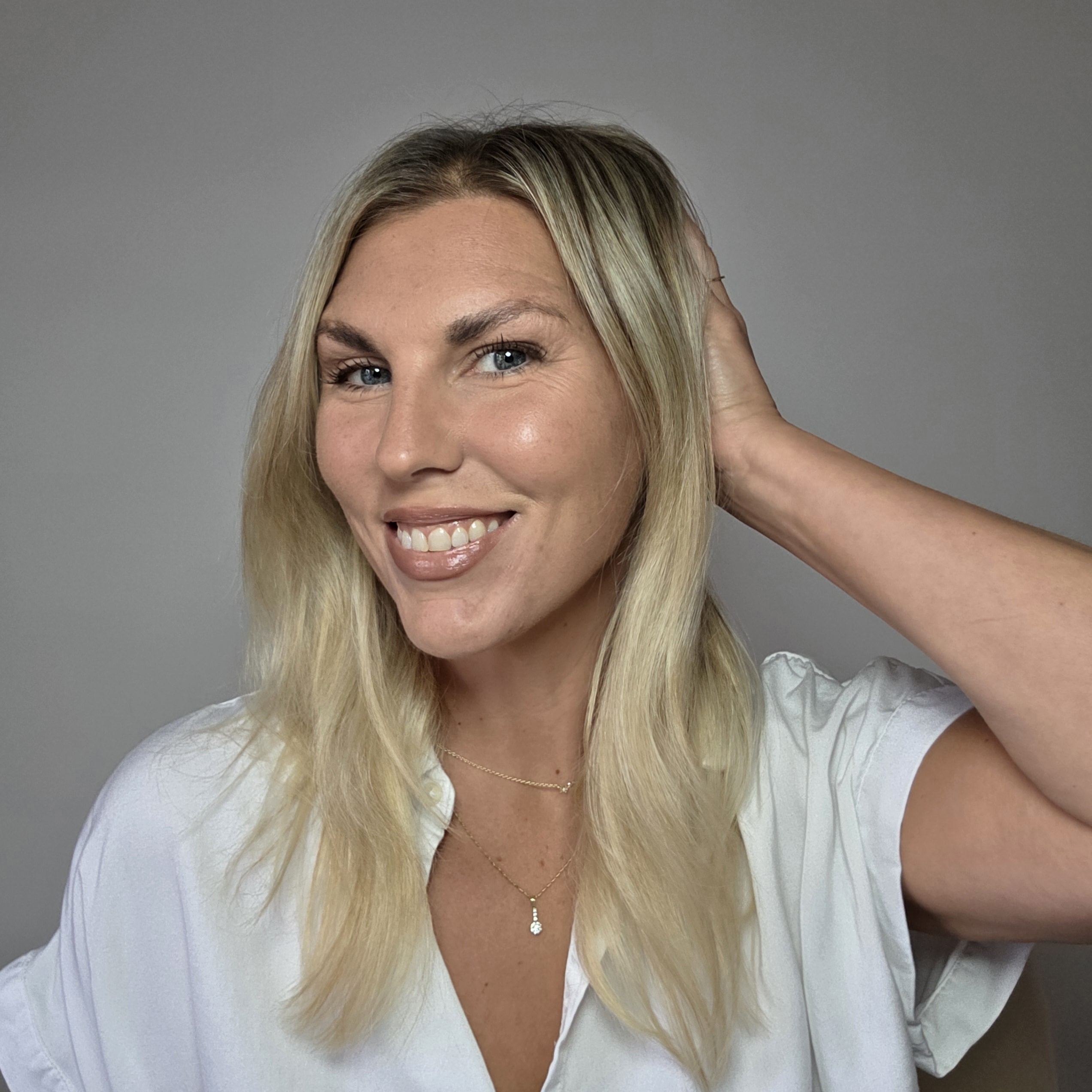
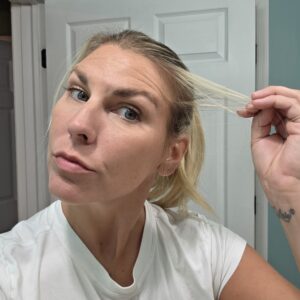
Last summer I was getting ready for tennis and I pulled my hair back into a ponytail — something I’ve done a thousand times — and I had flyaways everywhere. Not the cute kind. The kind that made me think my hair was actually breaking off from being pulled back too much.
I genuinely panicked. I started mentally calculating how many ponytails were too many ponytails and whether I needed to start showing up to tennis with my hair down like some kind of romantic movie protagonist who definitely does not sweat.
Luckily I had a hair appointment shortly after. My hairdresser took one look and told me it was all new growth. Not breakage. New hair.
For the first time since turning 40 I felt like something was actually going my way in the hair department.
But that moment made me realize something — I had been so focused on worrying about what my hair was losing that I hadn’t stopped to actually understand what was happening to it. So I did the research. And here’s what nobody tells you.
Why Hair Changes After 40
Hormonal changes during perimenopause and menopause can affect hair density, strand diameter and texture, but they are not the only possible explanation for thinning or shedding. Genetics, stress, illness, thyroid problems, nutritional deficiencies and certain medications can also play a role. The American Academy of Dermatology notes that female-pattern hair loss commonly begins in midlife and that hormones may be one factor.
Here’s the simplified version: hair moves through growth, transition and resting phases. Research on the menopausal transition and the hair follicle suggests that changing hormone levels can influence that cycle. That can show up as slower growth, finer strands, reduced density or increased shedding—but the pattern varies from person to person.
Three Common Hair Changes After 40
If you’re over 40 and your hair feels different than it used to, you’re probably experiencing one or more of these:
More shedding than you remember. Some increased shedding can happen around hormonal changes, stress or illness. A noticeable or persistent change is worth discussing with a dermatologist rather than assuming it is simply age.
Less volume and fullness. Individual strands may become finer with age, and female-pattern hair loss can also cause gradual thinning—often beginning with a widening part or a smaller ponytail.
Slower growth. This one frustrated me the most. Hair that used to grow quickly seems to just… stop. Again this comes back to the growth cycle spending less time in the active growth phase.
What Can Make Aging Hair Feel Worse
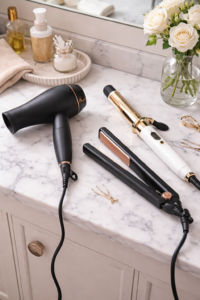
Here’s the honest part. Some of what we do to our hair in our 40s makes the situation significantly worse without us realizing it.
Pulling it back too tight too often. I’m guilty of this with tennis. Repeated tension on the hairline can cause breakage and even traction alopecia over time. A looser ponytail or a silk scrunchie makes a real difference.
Using the wrong products. Heavy products that work beautifully on thicker younger hair can weigh down finer mature hair and make it look flat and lifeless. What worked in your 30s might not be what your hair needs now.
Skipping scalp care. This is the big one. Most of us focus entirely on our hair and completely ignore our scalp — which is where hair actually grows from. A neglected scalp means a compromised growing environment. I explain the full process in my step-by-step scalp-care routine after 40.
Over washing or under washing. Both cause problems. Over washing strips natural oils that protect the hair and scalp. Under washing leads to buildup that can clog follicles. Finding your hair’s actual rhythm matters more after 40 than it did before.
What Helps Hair After 40
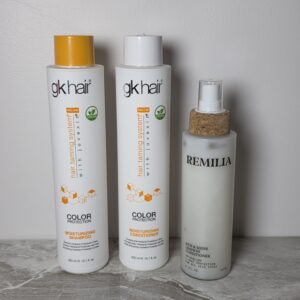
gk hair Moisturizing Shampoo & Conditioner
Remilia Rice and Shine Leave-In Conditioner
I want to be careful here because I’m not a dermatologist and I’m not going to pretend I have all the answers. What I can tell you is what has made a genuine difference for me personally.
Scalp first thinking. Treating my scalp the way I treat my skin — with intention, with the right ingredients, with consistency — changed everything. My scalp-care routine after 40 explains the exact steps and products I use.
Gentler cleansing. Switching to a sulfate free shampoo made a noticeable difference in how my hair felt after washing. Less stripped, more manageable.
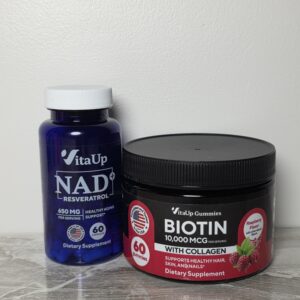
Biotin supplementation. I take biotin gummies consistently, and my hairdresser has commented on my growth—but that is my personal experience, not proof that the supplement caused it. Supplements are not a substitute for diagnosing the reason for shedding, and I would check with a healthcare professional before starting one.
Loosening up. Both literally — fewer tight ponytails — and figuratively. Stressing about hair changes can actually make them worse because cortisol affects your hair growth cycle too. Which feels deeply unfair but here we are.
When to See a Dermatologist About Hair Changes
Make an appointment if shedding is sudden, you see bald patches, your center part is widening quickly, your scalp is painful or inflamed, or the change continues for several months. A dermatologist can distinguish female-pattern hair loss from temporary shedding and other conditions that can look similar. The AAD explains what to expect from a hair-loss evaluation, while Cleveland Clinic outlines common causes of hair loss in women.
Hair Changes After 40: Frequently Asked Questions
Is hair thinning after 40 normal?
Hair can become finer or less dense with age and hormonal changes, but noticeable thinning can also have other causes. Persistent or worsening changes deserve a professional evaluation.
Can perimenopause change hair texture?
It can. Hormonal shifts may affect strand diameter, density, growth and manageability, although genetics, styling habits, health conditions and medications can contribute too.
How can I tell new growth from breakage?
New growth often has tapered ends and appears in multiple lengths near the scalp. Broken hairs may look blunt, frayed or concentrated where hair experiences repeated heat, chemical processing or tension. A stylist or dermatologist can help if you are unsure.
What helps aging hair look fuller?
Gentle cleansing, lightweight conditioning, less tension from tight hairstyles and minimizing unnecessary heat can improve how hair looks and feels. Treatment for true hair loss depends on the cause, so diagnosis matters more than buying a long list of products.
What to Remember About Hair Changes After 40
Your hair is not giving up on you. Changes in your 40s are common, but they are not all caused by the same thing. Understanding your own pattern—and getting professional help when the change is sudden or significant—is the first step toward doing something useful about it.
And sometimes those flyaways you’re convinced are breakage? They’re new growth.
I’ll take that kind of surprise any day.
Everything I use for my hair is linked in my LTK — you can find that here. You can also read how my hair routine changes between Pennsylvania and Florida, or follow my step-by-step scalp-care routine after 40. For more practical help, see the hair-damage repair routine that worked for me, the habits and products I use for hair longevity after 40, and the simplified hair products I actually use after 40.
6 Responses